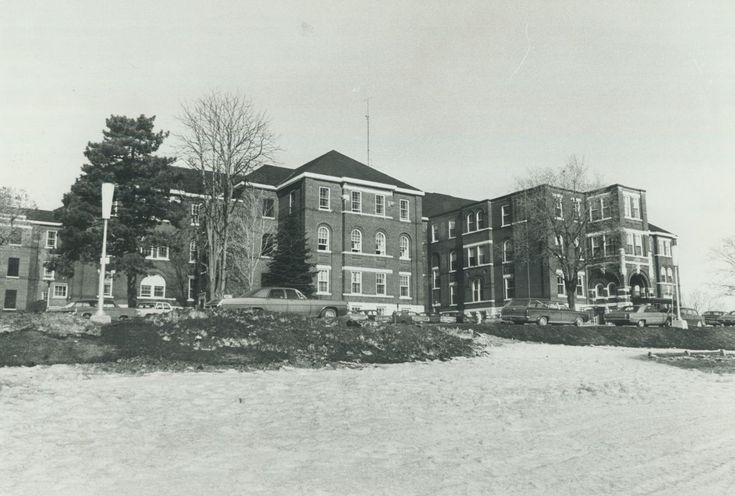
Huronia Regional Centre, 1970s, and post closure, photo (right) via CBC Archive, photo (left) by Anne Zbitnew
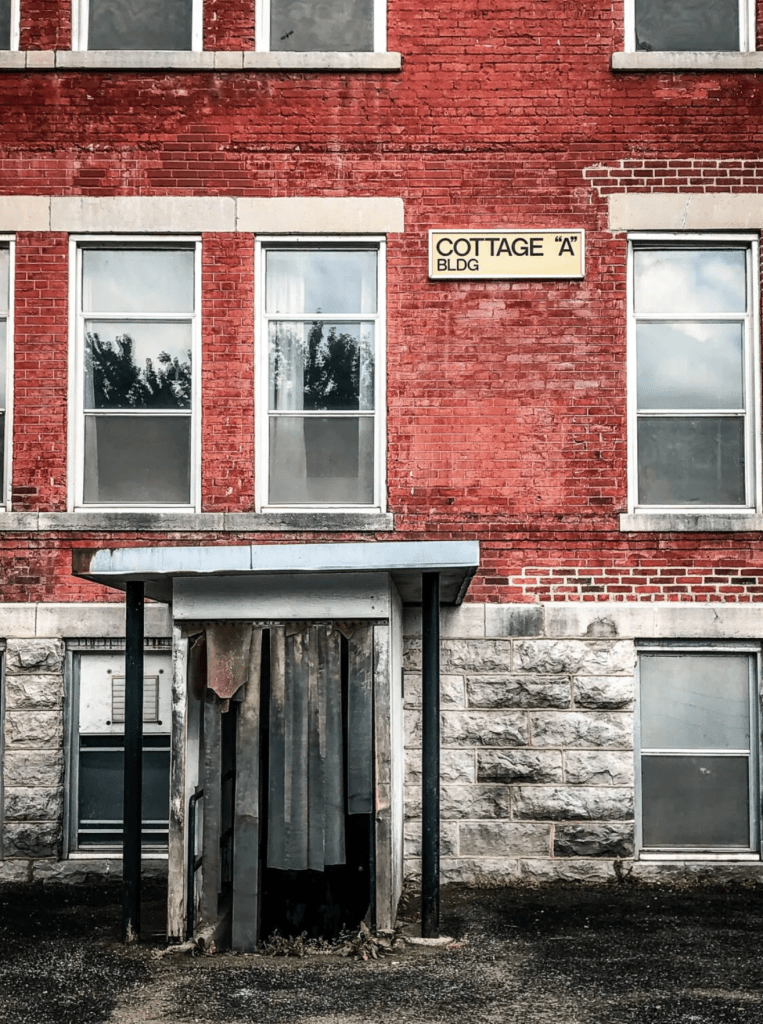
The Huronia Regional Centre (initially the Orillia Asylum for Idiots, and then the Ontario Hospital School, and the Ontario Hospital, Orillia) was built and operated by the government of Ontario between 1876 and 2009 to house those who attracted the label of intellectual and/or developmental disability.
People housed at the institution “were sentenced to a life defined by neglect, poor sanitation, excessive use of restraint, seclusion, extreme physical, sexual and emotional abuse as well as over medication and mis-medication.” (Remember Every Name). For the first 100 years of the institution’s existence, no assessment was required to incarcerate children and adults into these institutions, and children as young as 10 were forced into hard physical labour, childcare, and the production of clothing and shoes.
Residents were over-medicated, given trial shots of birth control (Depo-Provera), experimented on using Resperin – an experimental drug that included creosote and phenol vapor, both toxic – and sterilized. Many of the deaths which occurred at the Huronia Regional Centre in its 150 year legacy were never properly investigated, and as a result, institutional abuse by staff was rarely recognized and prosecuted. Minutes from a 1972 Medical Business Meeting seem to suggest that the unclaimed bodies of some residents may have been sent to schools for use as anatomical specimens. (Remember Every Name).
After its closure in 2009, survivors issued a class action lawsuit against the government of Ontario for the inhumane treatment at the institution. The lawsuit was settled out of court, rather than going to trial, and survivors received $35,000,000 in settlement money. The maximum each survivor could receive was a one-time payment of $42,000, and the minimum, $2,000. However, due to the arduous process required to actually receive the money, which included survivors having to re-tell and verify their trauma and abuse, many survivors received nothing.
This story, Time Travel Wheels, although fictional, is based on the very real experiences of survivors. By sharing their story, they hope to shed light on the treatment of people labelled with developmental and intellectual disabilities, and to prevent future instances of neglect and abuse.
 Time Travel Wheels